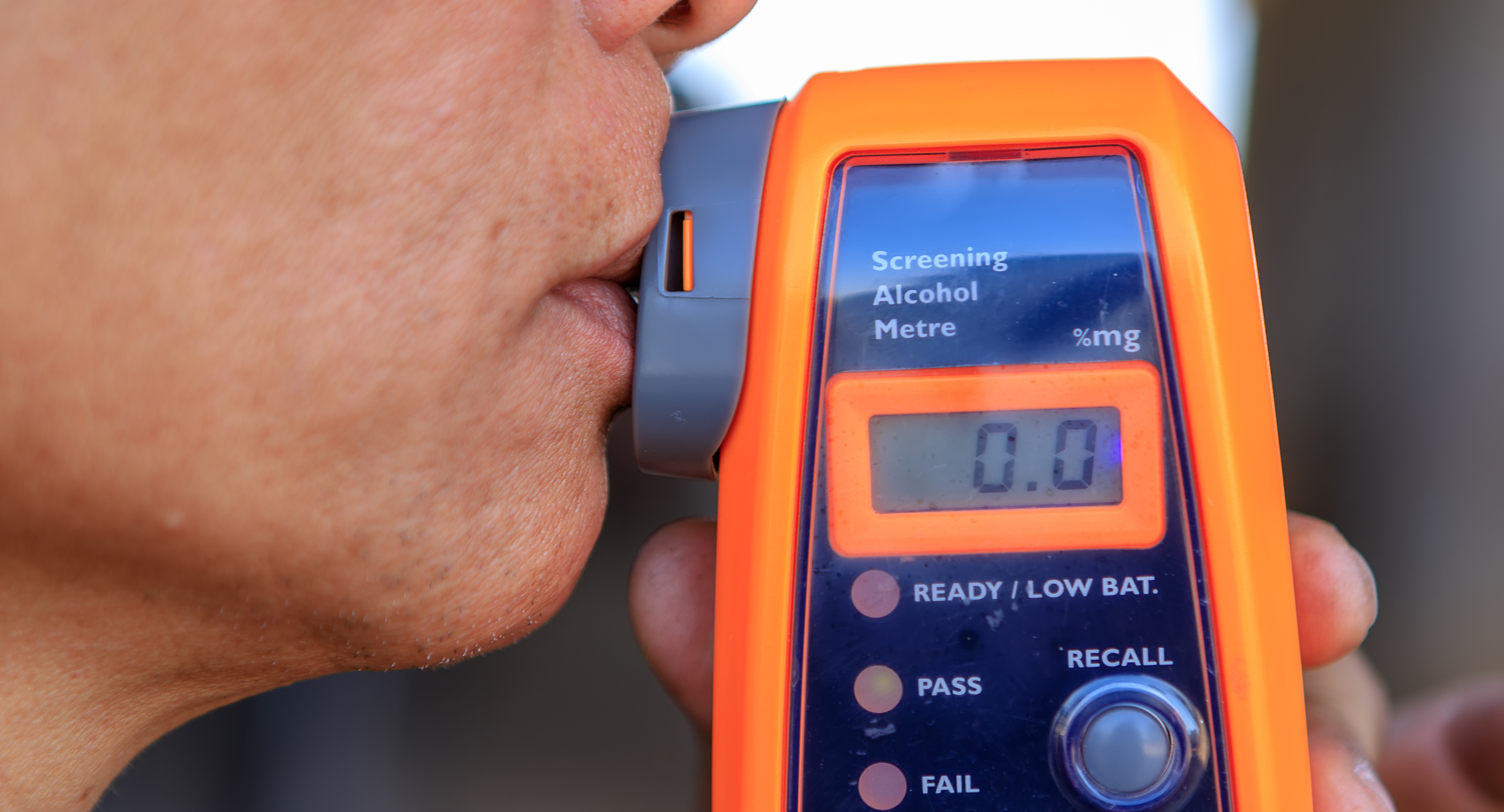
People on pretrial bond or probation in Texas face serious consequences after a positive urine drug screen. Judges change bond conditions. Probation officers seek revocation. Prosecutors treat the case as closed. But courts rarely ask the key question: What does this test prove?
Courts give these tests more weight than they deserve. This article examines what urine drug screens measure, their limitations, and the legal rules that require more than a screening test before someone goes to jail.
Probation offices test urine samples using plastic cups with built-in test strips or dipsticks.
These cups cost little, give quick results, and need no lab or special training.
These cups are point-of-care testing (POCT) lateral flow immunoassays. That is the scientific term for the test your client took before the probation officer filed to revoke.
Two Tests, Not One
Urine drug testing has two stages. First, the POCT cup or dipstick is used for screening. Second, confirmatory testing is performed in a forensic lab using gas chromatography-mass spectrometry (GC-MS) or liquid chromatography-tandem mass spectrometry (LC-MS/MS).
These tests differ completely. The POCT cup screens quickly and tries to catch every positive, even if it lacks precision. Lab tests use advanced methods to identify exact compounds with certainty. The cup gives a preliminary result. The lab gives a final answer.
Courts often treat probation office cups as lab confirmations, even though they are less reliable. Forensic science studies show that these screening tests often react to the wrong substances, leading to false positives. Elrasheed et al. (2025) and Hughey & Colby (2019) confirm this. That is why confirmatory testing must come before any action.
How the Cup Works
The cup does not identify a specific drug. It uses an antibody—a protein that binds to specific shapes—to see if something in the urine resembles the target drug. The antibody cannot read labels. It only recognizes shapes.
Think of the antibody binding sites as spaces in an empty egg carton. You have two kinds of eggs: drug eggs (the real drug molecules) and red-flag eggs (the detection marker built into the test).
The point where this happens is the cutoff. A positive result means enough drug blocked the detection marker from making a line. The manufacturer, lab, or agency sets the cutoff—not a scientific measure of impairment. Results near the cutoff fail more often due to dilution, timing, or the amount of water the person drank.
Another issue is cross-reactivity. Some substances look enough like the target drug to bind the antibody, even when they are not the drug being tested. Legal medications, supplements, and harmless compounds can all do this if they have similar structures. The test cannot tell the difference. You might get a positive result without knowing what caused it.
Cross-reactivity is not a defect. It is a known, expected, documented limit of how these antibodies work. Qriouet et al. (2021). Hughey & Colby (2019) showed through large-scale analysis that cross-reactivity patterns are consistent and predictable.
Amphetamine screens are among the least specific. They react to trazodone, bupropion (Wellbutrin), methyldopa, procainamide, and ceftaroline. So, if someone taking Wellbutrin tests positive for amphetamines, it does not mean they used methamphetamine. Without a confirmatory test, you cannot know what caused the result.
Traditional opiate immunoassays are optimized to detect morphine-like structures and are calibrated primarily to morphine and codeine metabolites. They do not directly detect heroin; instead, they detect morphine formed after metabolism. Heroin’s unique metabolite, 6-monoacetylmorphine (6-MAM), is short-lived and often missed outside a narrow detection window. Many commonly prescribed opioids, including oxycodone, may require separate, drug-specific panels. Without confirmatory testing, a general “opiate positive” does not identify which compound triggered the result.
Cannabinoid immunoassays have historically demonstrated cross-reactivity with certain nonsteroidal anti-inflammatory drugs such as ibuprofen and naproxen, particularly in older assay formulations. Modern panels have reduced but not eliminated cross-reactivity concerns. They also were not designed to detect many synthetic cannabinoids or emerging hemp-derived compounds, creating additional interpretive limits.
What the State Should Do to Establish a Proper Predicate
Most probation officers who present a positive result can only describe what they saw on the cup. This limited explanation often leads to serious consequences.
Kelly v. State, 824 S.W.2d 568 (Tex. Crim. App. 1992), and Texas Rule of Evidence 702 require more. A witness presenting a drug screen as evidence of drug use should be able to, at a minimum, explain:
- What type of test is it? The cup is a screening test. It does not confirm the presence of a specific drug. If the State cannot establish that distinction, it has not shown that the result proves what it claims.
- How it works. The device uses antibodies that bind to molecular structures by shape. The presence or absence of a line reflects whether binding occurred above a preset cutoff threshold.
- What the cutoff represents. The witness should know the specific cutoff concentration for the panel and whether it was set by the manufacturer, a laboratory, or the supervising agency. The cutoff is an administrative threshold, not a measure of impairment.
- Cross-reactivity. Immunoassays are known to cross-react with structurally similar compounds. The State should be able to identify the major documented cross-reactors for the specific device used and address whether the defendant’s medications or supplements could account for the result. Without that inquiry, the reliability of the inference remains untested.
- Chain of custody. The State should account for the specimen from collection through result, including who collected it, how it was handled, whether it was read within the manufacturer’s specified time window, and whether procedural instructions were followed.
- The package insert. Every POCT device ships with documentation specifying cutoffs, cross-reactivity data, reading times, and limitations. The proponent should be prepared to produce and rely upon that documentation. Defense counsel should demand it in discovery. It often contains limitations unknown to the test administrator.
- Device identification. Different manufacturers use different antibodies with different performance characteristics. The State should identify the specific brand and lot number of the device used.
If the proponent cannot supply this foundational information, the court lacks the basis required by Rule 702 to evaluate reliability.
Pretrial Bond Hearings: The Rules Apply
Many lawyers do not know that Texas Rule of Evidence 101(e)(3)(C) draws a line. The Rules of Evidence generally do not apply to bail proceedings. But they do apply to hearings to deny bail, revoke bail, or increase bail. When the State asks to revoke a bond or increase bail based on a positive drug screen, the Texas Rules of Evidence apply.
The State’s usual evidence (a cup result read by a supervision officer and noted in a file) must meet the rules about hearsay, foundation, and scientific evidence. A POCT result without a proper foundation is scientifically inadequate and subject to exclusion under Rule 702.
Bond revocation implicates liberty interests protected by the Constitution. United States v. Salerno, 481 U.S. 739 (1987). Due process demands reliable evidence for adverse action. A presumptive POCT result not confirmed by GC-MS or LC-MS/MS shows only that an antibody on a plastic strip bound to something. It does not reliably show drug use.
Probation Revocation: The Stakes Are High
The Texas Court of Criminal Appeals held that although revocation is not a criminal trial, the Rules of Evidence generally apply at revocation hearings. Cobb v. State, 851 S.W.2d 871 (Tex. Crim. App. 1993). Hearsay is still hearsay unless it fits an exception under Rules 803 or 804, qualifies as non-hearsay under Rule 801(e), or comes in without objection.
Probation departments often submit the supervision file as evidence. Texas courts admit these files as business records under Rule 803(6) when the State lays the proper foundation. Greer v. State, 322 S.W.3d 110 (Tex. App.—Houston [1st Dist.] 2010, pet. ref’d).
But admission under 803(6) does not solve all problems. Hearsay within hearsay (for example, a lab assertion in a file note, a treatment provider’s narrative, a third party’s report) must independently meet a hearsay exception under Rule 805. Defense counsel must make the State distinguish personal knowledge from third-party assertions and scientific claims buried in file notes.
Confrontation and Due Process
Revocation and adjudication proceedings are not criminal trials, and Texas courts analyze procedural protections in these hearings primarily through the due process clause, not the Sixth Amendment Confrontation Clause. The Supreme Court’s baseline is Morrissey v. Brewer, 408 U.S. 471 (1972), and Gagnon v. Scarpelli, 411 U.S. 778 (1973): the defendant must have a meaningful opportunity to contest the alleged violation and the evidence offered to prove it. In Hughes v. State, 691 S.W.3d 504 (Tex. Crim. App. 2024), the Court of Criminal Appeals emphasized that supervision proceedings, including remote proceedings, must still provide meaningful participation and a fair opportunity to consult with counsel and respond to the State’s proof. When the procedure itself prevents that, the problem is constitutional even if the State calls it informal.
A positive POCT result offered through a witness who cannot explain the test’s mechanism, cross-reactivity profile, or chain of custody does not satisfy that standard. The State must establish what the test measures and how reliably it was performed. Anything less deprives the defendant of a meaningful opportunity to challenge the evidence being used to revoke liberty.
Kelly, Hall, and the Blue Cube
Scientific evidence must meet Kelly v. State and Rule 702 requirements. A POCT result offered as proof of drug use struggles against the Kelly factors. The known cross-reactivity problem is a documented error rate. The forensic science community does not accept immunoassay screens as confirmation. They accept them only as a basis for further testing. Under Kelly, courts must conduct a meaningful gatekeeping inquiry before admitting an unconfirmed POCT result as proof of drug use.
In Hall v. State, 297 S.W.3d 294 (Tex. Crim. App. 2009), the Court of Criminal Appeals described the blue cube problem. If the State walked in and announced that a blue cube says the defendant used methamphetamine, the court would demand to know what the cube is, what it measures, how reliably it measures, and whether the operator knew how to use it. The result alone proves nothing. The methodology proves everything.
A POCT cup without confirmatory testing or a qualified witness is that blue cube. The device gives a result. But unless someone explains the cross-reactivity, how they set the cutoff, and whether the detected substance matches the alleged drug, the result is not evidence under Hall and Rule 702. It is just a claim.
Confirmatory Testing
When the State produces GC-MS or LC-MS/MS testing, demand the full lab packet and analyst testimony. Due process requires the State to show what the result means and how reliably they got it. A records custodian who can authenticate a report cannot explain the methodology, the quality controls, or the basis for concluding that the identified compound is what the State alleges.
The Preponderance Standard Does Not Lower the Reliability Bar
The preponderance standard sets how much evidence you need. It does not make scientific evidence less reliable. Toxic tort and drug injury cases use this standard, too. Daubert v. Merrell Dow Pharm., Inc., 509 U.S. 579 (1993), and E.I. du Pont de Nemours & Co. v. Robinson, 923 S.W.2d 549 (Tex. 1995), require strict checks in civil cases because reliable methods matter more under the preponderance standard. An unconfirmed POCT result has almost no confirmatory value.
What Defense Counsel Should Do
- Demand the package insert in discovery. Every POCT device ships with documentation that specifies cutoffs, cross-reactors, and proper use.
- Cross-reference your client’s medications. Bupropion, trazodone, certain antibiotics, fluoroquinolones, and over-the-counter drugs are documented cross-reactors. Compare prescriptions against the package insert before the hearing.
- Challenge the absence of confirmatory testing. Best practice—recognized across forensic and clinical toxicology—is that a presumptive positive screen should be confirmed by GC-MS or LC-MS/MS before serious adverse action is taken.
- Attack embedded hearsay in the probation file. When the file comes in under Rule 803(6), identify third-party assertions and lab reports that are hearsay within hearsay under Rule 805.
- Frame the challenge as a due process issue. Argue that due process requires the State to prove reliability, and that a witness who cannot explain the mechanism, cross-reactivity, or chain of custody has not done that. This argument is grounded in what Texas courts have actually held.
- Request a Kelly reliability hearing. When the sole proof is an unconfirmed POCT result, the rules require a gatekeeping inquiry.
- Preserve the record specifically. Preserve your Kelly/Rule 702 objection, your Rule 805 hearsay-within-hearsay objection, your due process reliability objection grounded in Hughes, your Hall blue cube objection, and your legal sufficiency argument.
Conclusion
The plastic cup in a probation office is a useful screening tool. It is not proof of drug use. The forensic science community has said so consistently. Legal standards governing scientific evidence in Texas require courts to understand what a test measures before using it to deprive someone of liberty.
A positive POCT result should prompt confirmatory testing. Until that happens, the cup starts an inquiry. It does not end one. Courts and lawyers who skip this step do not follow the law. They bypass it.
Defense attorneys must challenge the evidence at every step. The science supports this.
The law requires it.
Note: This article was written by Charles Pelowski, a Senior Trial Attorney for Michael & Associates. Charles is Board Certified in Criminal Law – Texas Board of Legal Specialization. He is an M.S. Candidate in Pharmaceutical Sciences (Forensic Toxicology) at the University of Florida.