Blood Alcohol Concentration (sometimes called Blood Alcohol Content) is the concentration of alcohol in a person's bloodstream, expressed as a percentage. BAC plays a critical role in DWI cases, traffic stops, field sobriety investigations, and license suspensions.
During nearly every DWI consultation I handle, one of the first questions I hear is, "My BAC was only 0.09%. Does that mean I'm automatically guilty?" The answer is no. BAC evidence is important, but it's only one piece of the prosecution's case, and I've defended many cases where chemical testing became the weakest part of the evidence.
A BAC of 0.08% or higher is the legal threshold for intoxication in 49 U.S. states, and Washington, D.C. Utah lowered its statewide limit to 0.05% BAC in December 2018. But BAC matters long before — and long after — that number.
Michael & Associates Criminal Defense Attorneys has a long history of resolving all types of DWI cases in Texas, Tennessee, and California, and we have DWI scientists on our staff who can challenge blood and breath test results. Depending on the evidence, we may be able to negotiate reduced charges, suppress unreliable chemical test evidence, or seek dismissal of the case. Please give us a call at (512) 764-1417 or schedule a free case review, and we will be happy to give you our take, free of charge.
Key Takeaways
- BAC is measured by breath, blood, or urine tests, each with unique strengths and weaknesses.
- For most adult drivers, the legal per se BAC limit is 0.08% in every U.S. state except Utah, where it is 0.05%.
- Higher BAC levels lead to enhanced penalties, including more jail time and steeper fines.
BAC Definition
Blood Alcohol Concentration (sometimes referred to as Blood Alcohol Content) is the ratio of alcohol to blood in your body.
For example, a BAC of 0.08% means 0.08 grams of alcohol per 100 milliliters of blood.
BAC can be measured through:
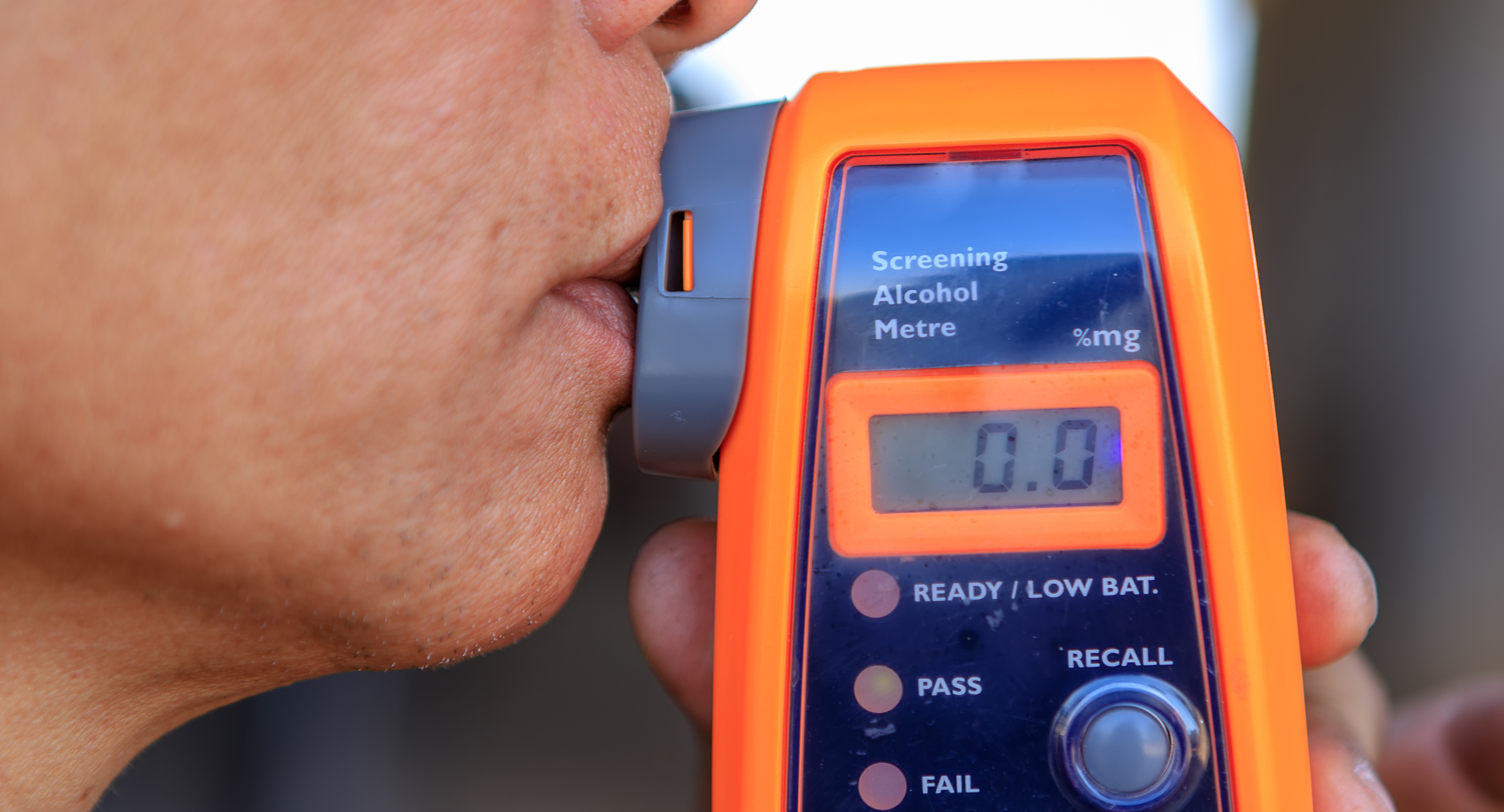
- Breath tests (an Intoxilyzer or similar device)
- Blood tests
- Urine tests (used less frequently than breath or blood testing)
Courts rely heavily on BAC to determine intoxication, impairment, and penalty levels in DWI cases.
How BAC Is Calculated
Blood Alcohol Concentration (BAC) measures the amount of alcohol in your bloodstream. It is expressed as the number of grams of alcohol present in 100 milliliters (mL) of blood. For example, a BAC of 0.08% means there are 0.08 grams of alcohol per 100 mL of blood.
A blood test measures alcohol directly by analyzing a blood sample in a forensic laboratory, often using headspace gas chromatography, which is widely considered the gold standard for alcohol analysis.
A breath test, however, does not measure alcohol in the blood itself. Instead, devices such as the Intoxilyzer estimate BAC by measuring alcohol in a person's deep-lung (alveolar) breath and applying a scientifically established breath-to-blood partition ratio. Because that ratio can vary from person to person, breath tests provide an estimate of blood alcohol concentration rather than a direct measurement.
Although both testing methods are generally accepted by courts, neither is infallible. Individual physiology, the timing of the test, instrument calibration, maintenance records, and laboratory procedures can all influence the reported BAC result. At Michael & Associates, our DWI defense lawyers evaluate not only the reported BAC but also how that number was obtained and whether the testing process complied with accepted scientific and legal standards.
How BAC Works in the Body
Once alcohol is consumed, it enters the bloodstream through the stomach and small intestine. BAC is influenced by:
- Body weight
- Gender
- Rate of drinking
- Food consumption
- Metabolism
- Type of alcohol
- Time between drinks
Peak BAC is usually reached 30 to 90 minutes after consumption.
Once alcohol reaches its peak concentration, the body gradually eliminates it through the liver. Most people eliminate alcohol at a relatively steady rate, but the exact rate varies based on individual physiology. This process is one reason timing is so important when evaluating BAC evidence and retrograde extrapolation.
Legal BAC Limits
In many states, prosecutors can pursue impaired-driving charges even when a driver's BAC is below the legal per se limit if there is evidence the driver's mental or physical abilities were impaired.
- 0.08% = Per se intoxication for most adult drivers.
- In many states, a very high BAC (typically above .15% BAC) can lead to enhanced penalties, additional sentencing factors, or mandatory ignition interlock requirements. The specific threshold varies by state.
- Commercial drivers have an even lower limit: 0.04%.
- Drivers under 21 are often subject to stricter alcohol laws than adult drivers, although the specific rules vary by state.
A BAC of 0.08% is not required to be charged with DWI. If officers believe alcohol or drugs impaired your driving, they can arrest you even with a lower reading.
Related: Key DWI / DUI blood and breath testing terms
Three Ways BAC Is Tested
It's important to understand that in every state, you can initially refuse BAC testing. However, depending on state law and the circumstances of the investigation, officers may seek a search warrant authorizing a blood draw if you refuse chemical testing. The refusal may also lead to a suspension of your driver's license.
There are three primary testing methods to determine a driver's BAC:
1. Breath Tests (Most Common)
A breath test uses a machine, such as the Intoxilyzer, to measure alcohol in the deep breath you take. Breath tests are fast, easy to use on the roadside, and give immediate results. However, they are vulnerable to calibration problems, operator mistakes, temperature changes, and certain medical or digestive conditions.
Different attorneys evaluate the advantages and disadvantages of breath and blood testing differently depending on the facts of a particular case. One of my first jobs is evaluating whether the testing method used created opportunities to challenge the prosecution's evidence.
2. Blood Tests (Generally Considered the Most Reliable)
A blood test is performed by a medical professional who draws a blood sample for laboratory analysis. If you refuse testing, officers can obtain a warrant to take your blood. Blood tests are generally more reliable and less affected by outside factors. The main drawbacks are timing delays, the potential for contamination, and storage issues.
In my experience, the timing of a blood draw can sometimes benefit the defense because alcohol absorption and elimination are dynamic processes. Every case is different, however, and the right strategy depends on the specific facts.
Important: Once a lawful search warrant has been issued, officers may use reasonable force to execute it if a driver refuses to comply.
3. Urine Tests (Less Frequent)
Urine testing is generally less common than breath or blood testing and is typically reserved for situations involving suspected drug impairment or when other testing methods are unavailable, depending on state law and agency policy.
Why BAC Is Not Always Accurate
BAC numbers are not infallible. Common issues include:
- Improper breath-test machine calibration
- Residual mouth alcohol
- Certain medical conditions (GERD, diabetes)
- Lab contamination during blood testing
- Delays between driving and testing
- Rising BAC (when BAC increases after the stop)
Two of our senior trial attorneys — James Fletcher in Austin and RC Pate in San Antonio — are certified DWI scientists, having earned the designation of American Chemical Society Forensic Lawyer-Scientist. Ten more of our attorneys are currently completing the training. As of July 2026, 124 lawyers in the U.S. have earned this designation.
Our ACS-CHAL Forensic Lawyer-Scientists understand the scientific principles behind breath and blood alcohol testing, including gas chromatography, laboratory quality control, chain of custody, and forensic toxicology. That training helps me identify weaknesses in chemical test evidence that may not be obvious from a police report alone.
This advanced forensic science training allows us to evaluate breath-test maintenance records, blood collection procedures, laboratory protocols, gas chromatography results, chain-of-custody documentation, and retrograde extrapolation opinions. Those issues can become critical when determining whether BAC evidence is scientifically reliable.
BAC vs. Impairment
A critical point: BAC does not always equal impairment.
Some people show signs of impairment at 0.04%. Others show none at 0.10%.
Many states allow prosecutors to pursue impaired-driving charges even when a driver's BAC is below the per se intoxication limit if there is evidence that alcohol or drugs impaired the driver's ability to operate a vehicle safely. The legal standard varies by state, but BAC is only one piece of the evidence prosecutors may rely on.
Officers also rely on driving behavior, observations during the traffic stop, statements made by the driver, and performance on Standardized Field Sobriety Tests (SFSTs) developed by the National Highway Traffic Safety Administration (NHTSA). Like chemical testing, SFST evidence can be challenged if the tests were administered improperly or if medical, environmental, or other factors affected the results.
The criteria for "impairment" can be ambiguous, and whether you're arrested depends on a split-second decision by the officer who pulls you over. An experienced DWI attorney must evaluate each case individually.
FAQs About BAC
Is BAC the same as impairment?
No. BAC is a number. Impairment varies based on the person, health, metabolism, and timing.
How many drinks does it take to reach 0.08%?
For many adults, it will take between 2 and 4 drinks within an hour. But this varies widely based on body size and metabolism.
Can BAC rise after you stop drinking?
Yes. Your BAC can continue to climb for up to 90 minutes after your last drink, which can impact test results.
Let Us Help
The senior trial attorneys at Michael & Associates Criminal Defense Attorneys have spent years defending DWI cases, and we've learned that BAC evidence is often far more vulnerable than most people realize.
And even if BAC evidence appears strong, prosecutors must still prove every element of the offense. The legality of the traffic stop, field sobriety testing, witness testimony, body camera footage, and chemical testing procedures can all affect the outcome of a DWI case.
If you believe there was an issue with your testing, contact us for a free case review.
We are currently accepting clients in the following areas:
Texas: Austin, Dallas, Fort Worth, Houston, and San Antonio
Tennessee: Nashville
California: Los Angeles and San Diego
Last updated: July 2026