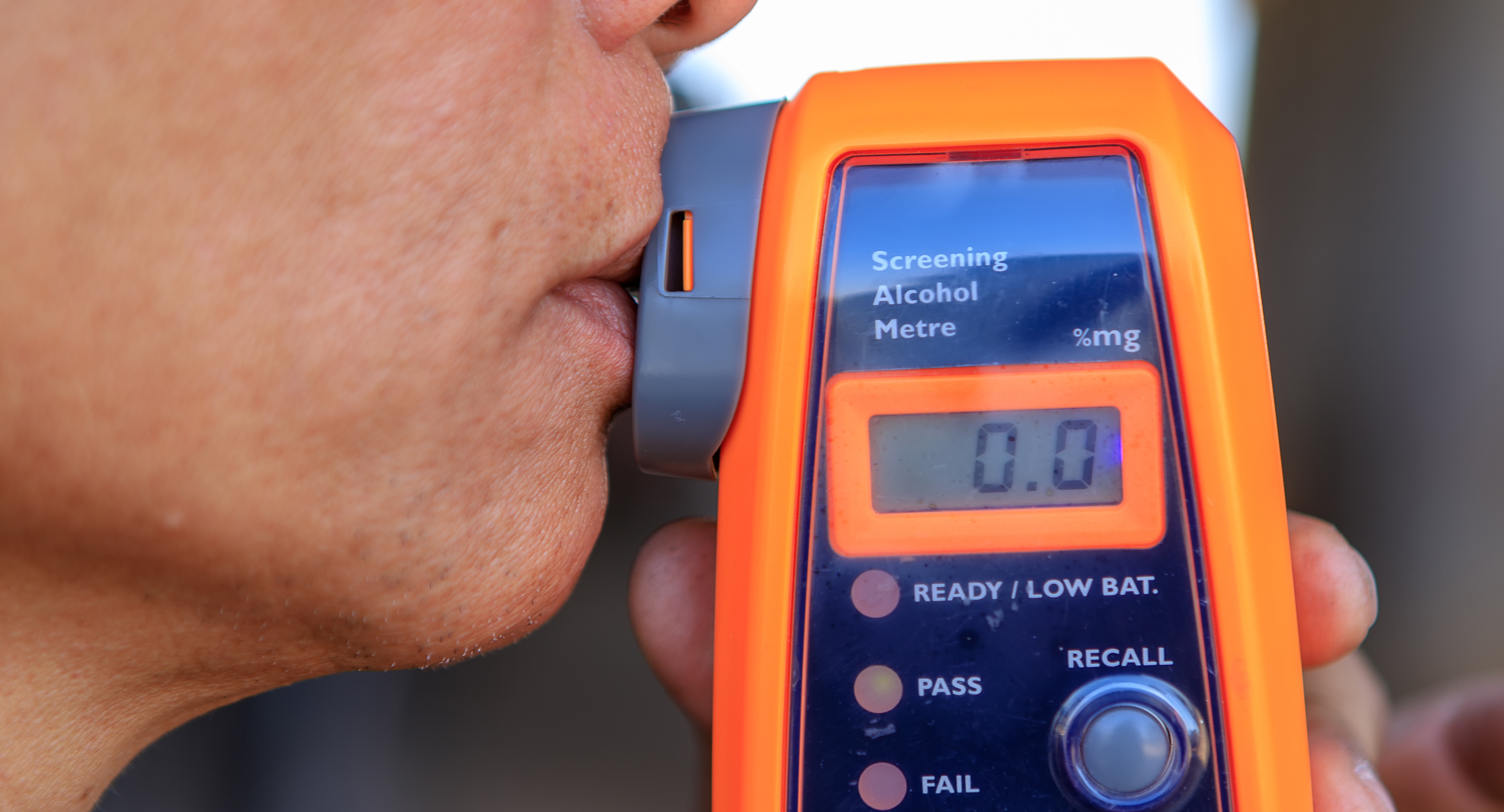
An ALR hearing, or Administrative License Revocation hearing, is a separate civil process after a DWI arrest in Texas that determines whether your driver’s license will be suspended. Under Texas's Implied Consent law, if you refuse or fail a blood, breath, or urine test during your DWI traffic stop, the Texas Department of Public Safety can automatically suspend your driver's license.
You have 15 days from the date of your arrest to request an ALR hearing. If you don't request this hearing, your license will automatically be suspended 40 days later.
This is an administrative hearing. It's separate from any criminal court proceedings, meaning your license can actually be suspended twice.
Key Takeaways
- An ALR hearing is a civil license suspension hearing separate from your criminal DWI case.
- You have 15 days after your arrest to request it — if you miss the deadline, your license is automatically suspended.
- If you lose at the ALR hearing, you'll likely still be eligible for an Occupational Driver's License.
Definition: What Is an ALR Hearing?
An ALR hearing is a civil administrative proceeding handled by the Texas Department of Public Safety (DPS) — not a criminal court.
It determines whether your driver’s license will be suspended after a DWI arrest, regardless of whether you’re found guilty of DWI in criminal court.
At the hearing, a DPS attorney must prove that:
- The police officer had reasonable suspicion to stop or detain you.
- Police can establish probable cause for your arrest
- You refused or failed a blood or breath test under Texas’s implied consent law.
If DPS meets these conditions, your license suspension will remain in effect.
If your defense attorney successfully challenges the evidence — for example, by showing a lack of probable cause or a testing error — your driver's license may be reinstated.
It’s important to note that any license suspension ordered through the ALR process will be in addition to any license suspension ordered as a result of your criminal proceedings.
The 15-Day Rule: Deadlines Matter
You have 15 days from the date of your DWI arrest to request an ALR hearing.
If you miss that deadline, your license will be automatically suspended about 40 days after your arrest. This is a critical point that cannot be overstated.
This is one of the most common mistakes people make after a DWI: waiting too long. There's no appeal unless there was a clerical or procedural error.
Once the deadline passes, there's no appeal unless there was a clerical or procedural error.
What Happens During the Hearing
An ALR hearing is held before an Administrative Law Judge (ALJ) who represents the State Office of Administrative Hearings (SOAH). The ALJ is responsible for ensuring that the hearing is conducted fairly and in accordance with the law.
It can take place in person, by phone, or by video conference.
At the hearing:
- The arresting officer's report and test results are entered as evidence.
- Your attorney may cross-examine the officer or DPS witnesses.
- You or your lawyer can present testimony, videos, or documents showing why the suspension is unjustified.
Unlike a criminal trial, there's no jury, and the judge only rules on whether the officer and DPS followed legal procedure.
Why the ALR Hearing Matters
Even though it's separate from your criminal DWI case, the ALR hearing can make or break your defense. Its purpose is to provide an impartial review of the circumstances surrounding your DWI arrest and to determine whether your license should be suspended.
It gives your attorney an early opportunity to:
- Review police reports, breath or blood test results, and dashcam footage.
- Question the officer under oath and lock in their testimony.
- Identify weaknesses in the state's evidence that can be used later in criminal court.
Winning the ALR hearing often means the difference between keeping your driver's license and dealing with a suspension. It's not just about retaining your driving privileges, but also about gaining valuable insights into the prosecution's case.
At Michael & Associates, we handle all aspects of the ALR, including requesting the hearing within the deadline. We will also represent you. In some jurisdictions, we even have designated ALR representatives who work exclusively on ALR representation. You won't usually need to attend.
If You Lose the ALR Hearing
If your license is suspended, you may still qualify for an Occupational Driver's License (ODL) — this is a restricted driver's license that allows you to drive to work, school, or essential appointments.
The length of your suspension depends on the circumstances:
- 90 days for failing a chemical test (first offense).
- 180 days or longer for refusing a test.
- Up to two years for repeat offenders.
Our experienced Michael & Associates DWI lawyers will help you apply for an ODL and minimize the impact of the suspension. Michael & Associates has an excellent track record of obtaining ODLs for our clients.
Frequently Asked Questions
What does an ALR hearing mean in Texas?
An ALR hearing, or Administrative License Revocation hearing, is a civil proceeding where the Texas Department of Public Safety determines whether your driver’s license should be suspended after a DWI arrest. It’s separate from the criminal court process.
How long do I have to request an ALR hearing after a DWI?
You have 15 days from the date of your arrest to request an ALR hearing with the Texas DPS. If you miss this deadline, your license will be automatically suspended on the 40th day after your arrest.
Can you win an ALR hearing in Texas?
Yes — Texas data shows that approximately 34% of Texans have successfully challenged their license suspension through the ALR process. The hearings are winnable, particularly if your attorney can show that the officer lacked probable cause, that the traffic stop was unlawful, or that testing procedures were flawed. Winning can help you keep your license and improve your overall DWI defense.
Legal Sources
Information for this post was derived from Michael & Associates' research, the Texas Department of Public Safety (DPS), and Texas Transportation Code Chapter 724, accessible via the Texas Open Data Portal.
Let Us Help
At Michael & Associates, we successfully represent clients at ALR hearings all the time. Contact us for a free case review.
We are currently accepting clients in the following Texas counties:
- Austin area / Central Texas: Travis, Williamson, Bastrop, Bell, Caldwell, Coryell, Lampasas, Llano, Hays, Milam, Blanco
- Dallas / Fort Worth area: Dallas, Collin, Denton, Ellis, Rockwall, Tarrant
- Houston area: Harris, Galveston, Fort Bend, Montgomery, Waller, Brazoria
- San Antonio area: Atascosa, Bexar, Bandera, Comal, Gillespie, Guadalupe, Kendall, Medina, Wilson