DWI probation in Fort Worth can allow a person to remain in the community instead of spending time in jail. But the person must complete the required court-ordered conditions, restrictions, programs, and sanctions for the specified period.
Probation is another term for community supervision, and not everyone is eligible. Your defense attorney can negotiate with the district attorney's office or ask the jury or judge for probation. If granted, you may not have to serve your sentence in jail as long as you follow the court's specific rules.
Our case records show that probation is a common outcome in Tarrant County DWI cases, but that doesn't necessarily mean you'll end up in jail if probation isn't offered. A lawyer should review the evidence carefully before deciding how to proceed.
Fort Worth DWI Probation Attorney
Whether probation is available or the right option for you depends on your current DWI charge, prior record, evidence, and the terms offered. Before accepting community supervision, let an experienced DWI defense lawyer review your case.
If you are offered DWI probation in Fort Worth, Michael & Associates Criminal Defense Attorneys can help you understand the required conditions. We'll also review the agreement to determine how it could affect a future DWI case.
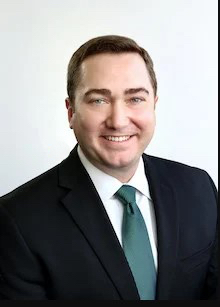
Our Fort Worth DWI defense team, led by Zach Redington, can thoroughly review your case to help you decide whether to pursue dismissal, a reduced charge, or another resolution instead of probation.
Zach has over 20 years of experience defending DWI and other criminal cases in state and federal court. Our DWI defense team also includes ACS-CHAL Lawyer-Scientists trained in blood, breath, and other forensic evidence.
How Does DWI Probation Work in Fort Worth?
For some DWI cases charged under Texas Penal Code § 49.04 in Fort Worth, a judge may suspend the sentence and place the person on community supervision. Then, the person on probation may have to follow strict conditions, such as:
- Avoid drinking alcohol
- Attend court-ordered classes
- Avoid going to certain locations
- Undergo random alcohol or drug testing
- Install and use an ignition interlock device (IID)
- Complete community service
- Attend counseling or treatment
- Avoid any new criminal offense
- Report to a probation officer in Tarrant County
- Pay court costs, fines, supervision fees, and monitoring expenses
The exact conditions for your case may vary. It will depend on the charge, criminal history, judge, agreement, and other facts of the case.
Is DWI Probation Always a Good Outcome?
Probation is a common outcome in our resolved Tarrant County DWI cases, but that doesn't mean you should automatically accept a probation offer.
This means that you shouldn't accept probation in every case. When the evidence is weak, it may be better to challenge the case rather than automatically accept community supervision.
In some cases, probation may be the best outcome, especially if it helps avoid a substantial jail sentence. As long as you comply with the court-ordered conditions, you can serve the sentence while living in the community. You can continue working and enjoy life with your family.
Before agreeing to a plea involving DWI probation, your defense attorney should examine the strength of your case. A probation offer may look favorable until you consider the full cost, length, interlock requirement, testing schedule, travel limits, and risks of violation.
Who May Be Eligible for DWI Probation in Fort Worth?
Community supervision may be available to many misdemeanor DWI cases, but it may also apply to some felony DWI cases.
Whether probation is available, how a DWI case may be resolved, and what conditions may be imposed can depend on factors including:
- Prior DWI or intoxication-related convictions
- Injury or death
- BAC of 0.15% or more
- Child passenger younger than 15
- Whether the person held a commercial driver's license
The following facts can also affect the negotiations and probation conditions:
- An open container
- Breath or blood test refusal
- The strength of the State's evidence
- The person's treatment needs and criminal history
How Often Do DWI Cases Result in Probation in Tarrant County?
Our case records show that probation is a common resolution in our Tarrant County DWI cases. In Michael & Associates' internal data, 117 of 138 resolved Tarrant County DWI cases, or 84.8%, ended with some form of probation.
The probation outcomes in our data fall into two main categories:
- Straight probation: The person is convicted but serves the sentence under community supervision instead of serving all of the imposed jail time.
- Deferred probation (deferred adjudication community supervision): The court defers a finding of guilt while the person completes community supervision. If completed successfully, the case can be dismissed without a final conviction for that offense.
Our records show the breakdown in Tarrant County:
- 29.0% deferred probation
- 25.4% straight probation
- 15.2% reduced charge plus deferred probation
- 15.2% reduced charge plus straight probation
Among the cases that ended in probation, approximately 52% involved deferred probation and 48% involved straight probation. About 36% of the probation outcomes also involved a reduction of the original charge.
These figures are based on Michael & Associates' resolved Tarrant County DWI cases and are not countywide court statistics. Every DWI case is different, and past results do not guarantee a similar outcome.
Common DWI Probation Conditions in Tarrant County
Probation is a common outcome in our Tarrant County DWI cases, including cases involving more serious charges. Among 2025 cases classified as felony DWI in our internal data, 90.9% ended in straight probation, while one resulted in incarceration. Probation was also the most common outcome among our classified misdemeanor cases, as 71.4% ended with some form of probation, including cases in which the original charge was reduced.
Note: These percentages reflect only the cases for which an offense level was available.
If you get DWI probation, don't base your actions on assumptions or friends' advice. Once you receive the probation order, read it carefully. Make sure you understand this written order, as it lists everything you must do to complete your probation.
Here's a quick overview of the most common probation conditions for DWI and the risk of violating each:
|
Probation Condition |
Risk of Violation |
|
Meet or communicate with an assigned Tarrant County supervision officer |
Missing an appointment or reporting late |
|
Complete a substance-use or risk assessment after placement on probation |
Failing to schedule or complete the assessment |
|
Complete an approved DWI Education or Intervention course |
Enrolling in the wrong program or missing the deadline |
|
Provide breath, urine, blood, saliva, or hair samples |
Missing a test, providing a diluted sample, or testing positive |
|
Avoid alcohol entirely when required by the order |
Assuming limited drinking is allowed |
|
Install and maintain a breath-testing device in the vehicle |
Missed tests, positive readings, lockouts, or unauthorized driving |
|
Complete assigned service hours by a deadline |
Waiting until the final months of probation |
|
Attend outpatient treatment, counseling, or another program |
Missing sessions or leaving treatment early |
|
Obtain permission before leaving Tarrant County or Texas when required |
Booking a trip before receiving written approval |
|
Pay fines, court costs, supervision fees, and program expenses |
Ignoring missed payments or failing to document inability to pay |
|
Avoid new criminal conduct |
Failing to report an arrest or police contact when the written order or supervision instructions require it |
What Counts as a DWI Probation Violation?
If you break one or more probation rules, the State may file a motion to revoke your probation or adjudicate guilt. However, the claim doesn't mean that it's already a proven violation. At a revocation or adjudication hearing, the State must prove at least one alleged violation by a preponderance of the evidence, which is a lower burden than the beyond-a-reasonable-doubt standard used to obtain a criminal conviction.
Common violation allegations include:
- Not completing a DWI class
- Missing treatment or counseling
- Tampering with a monitoring device
- Missing a probation appointment
- Driving without a required ignition interlock
- Committing a new criminal offense
- Failing or missing interlock tests
- Not paying probation fees despite having the ability to pay
- Failing to report a change of address or employment
Note: Keep all your medical records, work schedules, emails, payment receipts, class certificates, and written communications with your probation officer. They may help your defense if the State alleges you violated probation.
Can DWI Probation End Early in Fort Worth?
Under Texas Code of Criminal Procedure Article 42A.701, the court cannot terminate regular community supervision for a DWI conviction early. The statute excludes defendants convicted of offenses under §§ 49.04 to 49.08.
If you're on probation, always follow the conditions on your written order. Don't assume that any alcohol, travel, or vehicle restriction has ended unless the court signs an order and your probation officer confirms new instructions.
Real Tarrant County DWI Cases Resulting in Probation
DWI 3rd - Felony
Court: Tarrant County
Outcome: Straight probation
Time to resolution: Approximately four months
The client faced a felony third DWI charge. The case was resolved through a plea resulting in straight probation rather than incarceration.
DWI 2nd
Court: Tarrant County Criminal Court No. 5
Outcome: Straight probation
Time to resolution: Approximately four months
The client faced a second DWI after police responded to a report of reckless driving. Officers alleged the client drove into oncoming lanes and nearly caused an accident before stopping. The client had difficulty standing and walking, and a blood test showed a BAC of .378. Despite the high BAC and alleged dangerous driving, the case was resolved with straight probation.
DWI 1st
Court: Tarrant County Criminal Court No. 8
Outcome: Straight probation on DWI
Time to resolution: Approximately two months
The client faced a first DWI after allegedly striking another vehicle, driving several blocks, and then crashing. No injuries were reported. The case was resolved with straight probation.
DWI with BAC over .15
Court: Tarrant County Criminal Court No. 7
Outcome: Straight probation
Time to resolution: Approximately three months
The client faced a Class A misdemeanor DWI after allegedly driving the wrong way into a military installation and striking a sign while backing up. Breath testing produced results of .309 and .293, and officers reported multiple clues on field sobriety tests. Despite the exceptionally high breath-test results and driving allegations, the case was resolved with straight probation rather than incarceration.
Helpful Fort Worth DWI Resources
- Community Supervision and Corrections Department (CSCD): Information about local probation supervision, payments, forms, reporting, testing, and office locations in Tarrant County.
- CSCD Programs and Services: Learn about Tarrant County CSCD substance-abuse programs, probation education, the Misdemeanor DWI Court Program, treatment alternatives, and other supervision services.
- Tarrant County Criminal Court Docket Search: Search available settings and docket information for Tarrant County criminal courts.
Note: Online information does not override a signed court order. Always follow the reporting address, officer instructions, and deadlines listed in your probation paperwork.
Consult a Fort Worth DWI Probation Lawyer
If you're charged with DWI in Fort Worth, probation may help you avoid serving a portion or all of your jail sentence. But it still depends on the charge, your criminal history, and the facts of the case.
Michael & Associates can help you negotiate probation, challenge evidence that may affect sentencing, or prepare your case for court.
Our Fort Worth team includes Ryan Eady, a Board Certified specialist in Criminal Law and former First Assistant District Attorney and Chief Felony Prosecutor. His prosecution experience gives him insight into how the State evaluates DWI cases and the factors that may affect plea negotiations, sentencing, and probation.
We can also help identify weaknesses in chemical testing or other evidence that may strengthen the defense position when seeking a reduced charge, probation, or another favorable resolution.
Schedule a free case review today.