Are you facing criminal charges?
Get a free, confidential case review
Schedule Free ConsultationKey Takeaways
- Field sobriety tests are subjective tools used to establish probable cause, not guilt.
- HGN, Walk-and-Turn, and One-Leg Stand tests are susceptible to officer error and environmental factors.
- Poor performance on field sobriety tests does not measure BAC and does not determine the outcome of a DWI case.
What are Standard Field Sobriety Tests (SFSTs)?
- Horizontal Gaze Nystagmus (HGN)
- Walk-and-Turn
- One-Leg Stand
Who Created SFSTs and Why Police Use Them
Where SFSTs Fit in a DWI Investigation
- Traffic stop or initial contact
- Officer observations
- Field sobriety tests
- Arrest decision
- Breath or blood testing
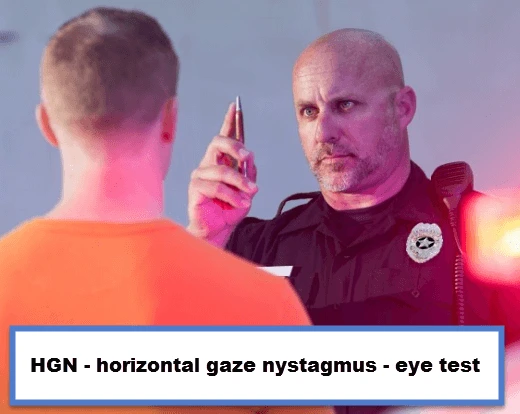
Horizontal Gaze Nystagmus (HGN) Test
What the HGN Test Measures
The HGN test assesses involuntary nystagmus while tracking a stimulus. Alcohol may exaggerate this movement, but many non-alcohol-related factors can also cause it.
How the Test Is Supposed to Be Conducted
The officer must:
- Check for equal pupil size and smooth tracking
- Move the stimulus at a specific speed
- Hold the stimulus at maximum deviation
- Observe each eye independently
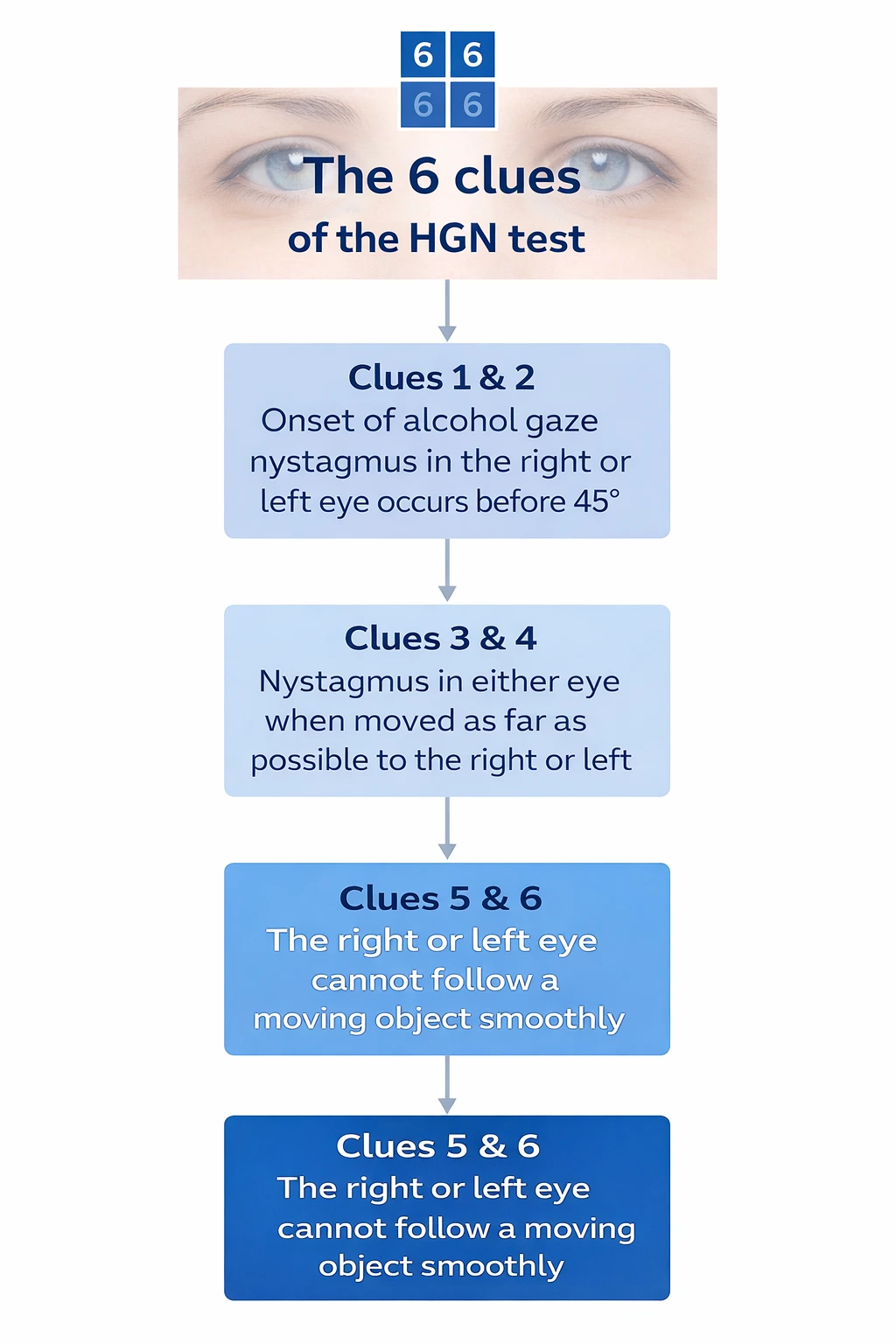
- Lack of smooth pursuit
- Distinct jerking at maximum deviation
- Onset of jerking before 45 degrees
- Improper stimulus speed
- Poor lighting or visual distractions
- Medical conditions affecting eye movement
- Failure to follow standardized procedures
Takeaway
Walk-and-Turn Test
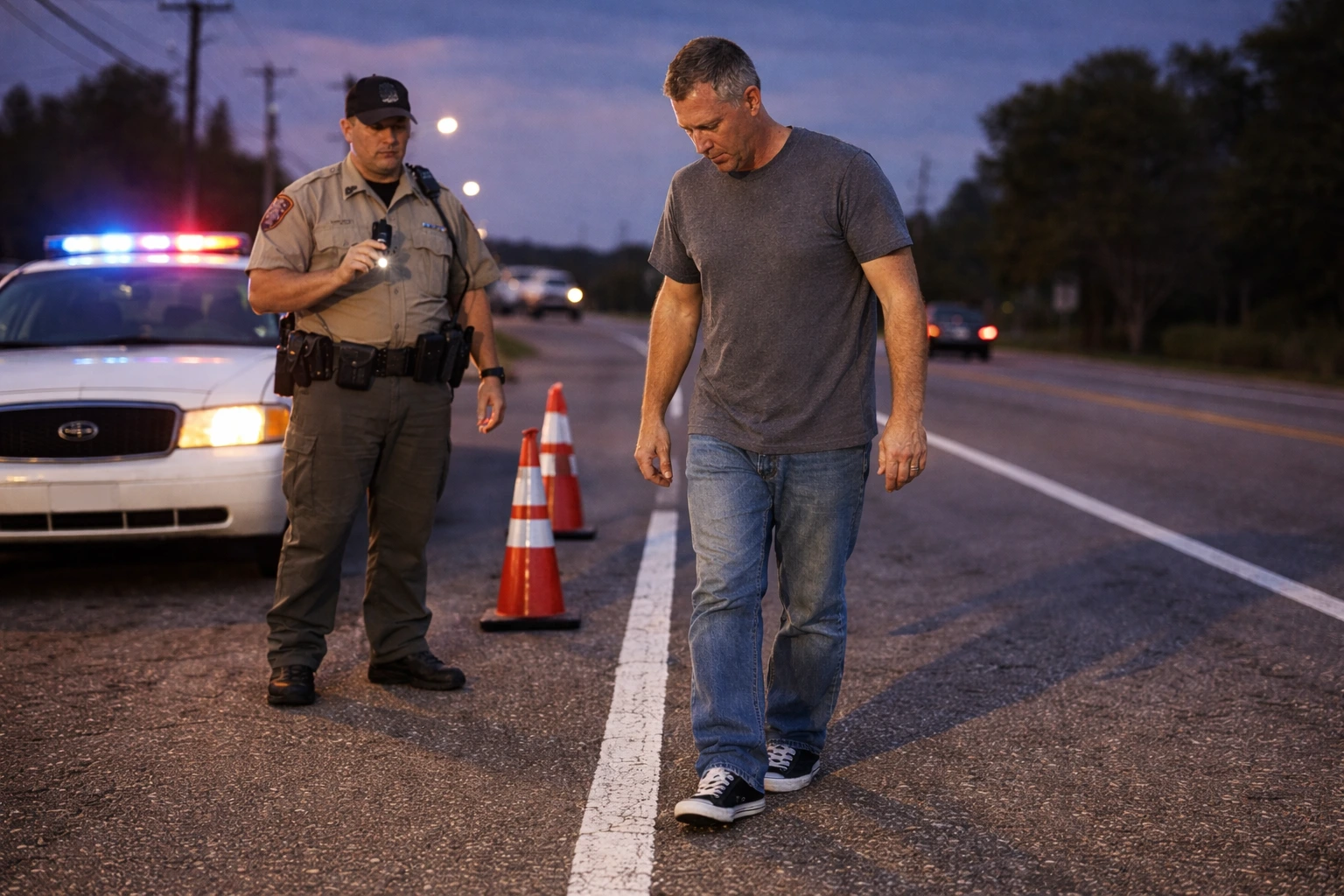
What the Walk-and-Turn Monitors
This test evaluates divided attention—the ability to listen, follow instructions, and perform physical actions simultaneously.
The officer must clearly explain and demonstrate:
- Heel-to-toe steps
- A straight line
- A specific turning method
- A fixed number of steps
- Losing balance during instructions
- Starting too soon
- Stepping off the line
- Improper turn
- Incorrect number of steps
- Uneven or sloped surfaces
- Footwear
- Age, weight, or injuries
- Nervousness or confusion
Takeaway
One-Leg Stand Test
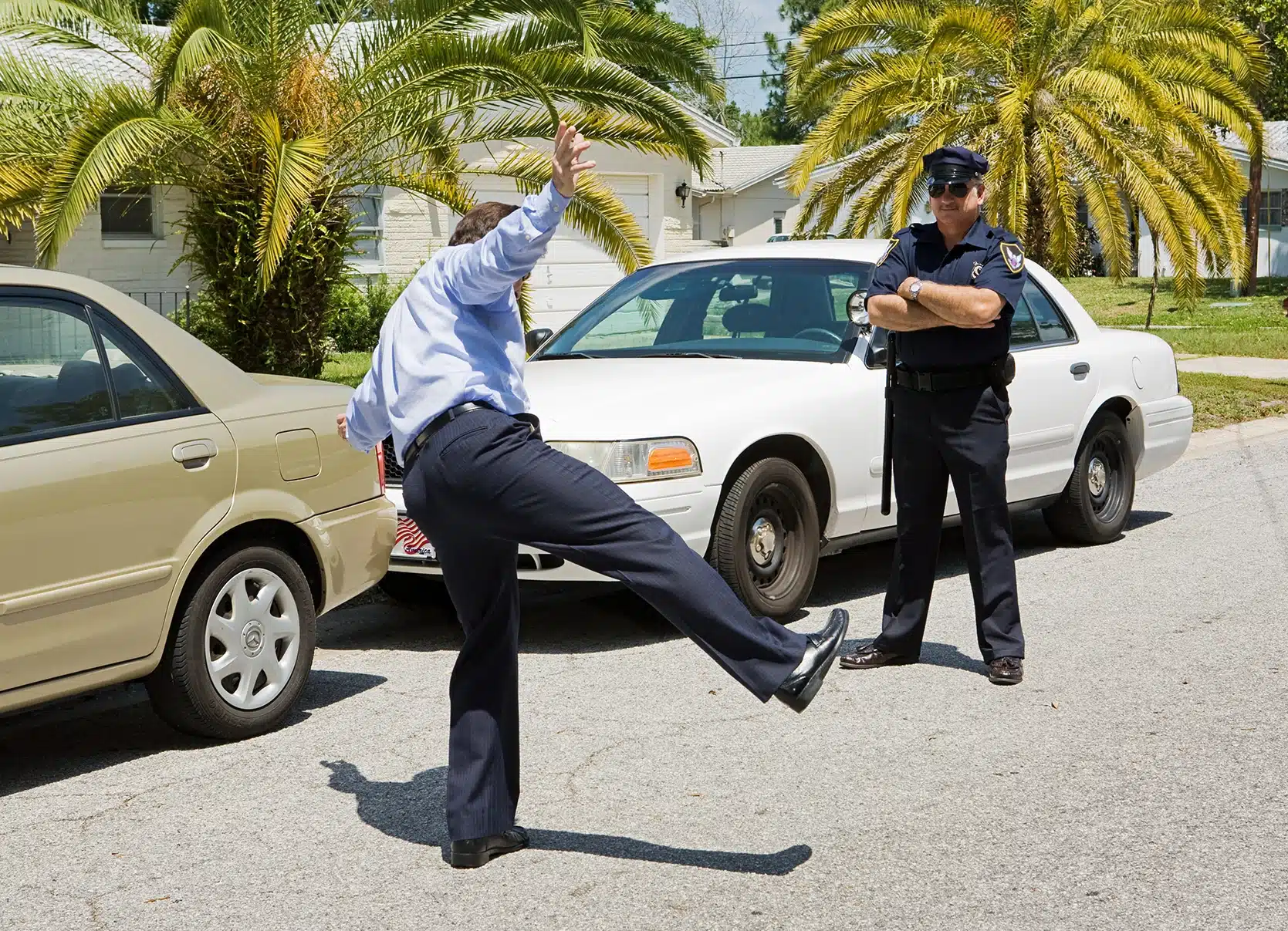
What the One-Leg Stand Measures
The subject must:
- Raise one foot approximately six inches
- Keep arms at sides
- Look at the raised foot
- Count out loud for 30 seconds
- Swaying
- Using arms for balance
- Hopping
- Putting the foot down
- Lower-body injuries
- Back or joint problems
- Inner ear or balance disorders
- Fatigue or anxiety
Takeaway
Key Differences Between the Three Tests
Horizontal Gaze Nystagmus
Measures: Eye movement
Most common weakness: Officer technique
Walk-and-Turn
Measures: Divided attention
Most common weakness: Surface and instructions
One-Leg Stand
Measures: Balance
Most common weakness: Physical limitations
Issues That Field Sobriety Tests Cannot Determine
- Measure blood alcohol concentration (BAC)
- Determine exact alcohol consumption
- Identify the cause of balance issues
- Distinguish alcohol impairment from medical conditions
- Establish guilt
Are Field Sobriety Tests Mandatory?
Are Field Sobriety Tests Reliable?
- Are not chemical tests
- Do not measure BAC
- Depend heavily on officer judgment
How SFSTs are challenged
- Improper administration
- Officer training gaps
- Video evidence contradicting reports
- Medical or physical explanations
- Environmental conditions
If–Then
- If SFST instructions are unclear or incomplete, reliability decreases.
- If roadside conditions interfere with balance, the results are not probative.
- When medical conditions are present, the risk of false positives increases.
- If the video contradicts the officer's descriptions, the evidentiary weight declines.
Bottom Line
FAQs about SFSTs
What are field sobriety tests?
Field sobriety tests are roadside observational tests police use to assess possible impairment and decide whether probable cause exists for a DWI arrest.
What are the three standardized field sobriety tests?
The three standardized field sobriety tests are Horizontal Gaze Nystagmus (HGN), Walk-and-Turn, and One-Leg Stand.
Do field sobriety tests measure blood alcohol concentration (BAC)?
No. Field sobriety tests do not measure BAC and are not chemical tests.
Are field sobriety tests mandatory?
No. Field sobriety tests are voluntary in most jurisdictions, and refusing them is not a criminal offense.
Does failing a field sobriety test mean you are intoxicated?
No. Poor performance on a field sobriety test does not prove intoxication or guilt.
What does the HGN test measure?
The HGN test observes involuntary eye movement while tracking a stimulus, which officers associate with possible impairment but which can also be caused by non-alcohol-related factors.What does the Walk-and-Turn test evaluate?
The Walk-and-Turn test assesses divided attention by requiring participants to follow instructions while performing physical movements.
What does the One-Leg Stand test show?
The One-Leg Stand test assesses balance and divided attention, not intoxication per se.
Can medical conditions affect field sobriety test results?
Yes. Eye disorders, inner ear issues, injuries, fatigue, anxiety, and neurological conditions can all affect field sobriety test performance.
Can roadside conditions affect field sobriety tests?
Yes. Uneven pavement, poor lighting, weather, footwear, and distractions can significantly impact test performance.
Legal Services Provided by Michael & Associates
Michael & Associates handles all types of felony and misdemeanor charges, including DWI, DUI, drug DWI, marijuana DWI, drug charges, assault and domestic violence, theft, and shoplifting.
Michael & Associates is currently accepting clients across the Dallas-Fort Worth area, including Collin, Denton, Ellis, Rockwall, and Tarrant counties.
We also represent clients in all of Texas's major metropolitan areas, including the following counties:
- Austin area / Central Texas: Travis, Williamson, Bastrop, Bell, Caldwell, Coryell, Lampasas, Llano, Hays, Milam, Blanco
- Houston area: Harris, Galveston, Fort Bend, Montgomery, Waller, Brazoria
- San Antonio area: Atascosa, Bexar, Bandera, Comal, Gillespie, Guadalupe, Kendall, Medina, Wilson
Contact us today to schedule a free case review.
Additional DWI Resources
- Top strategies and best DWI lawyers for a first offense in Dallas
- First vs second DWI in Dallas
- Second vs third DWI in Dallas
- Ultimate guide to DWI in Texas
- Is jail mandatory for a second DWI in Dallas?
- How to get a DWI expunged in Dallas
- Misdemeanor vs. Felony in Texas
- What is a No Refusal Weekend?
Sources: Michael & Associates research, What you need to know about SFST, DWI and DUI Glossary, National Highway Traffic Safety Administration (NHTSA), The DWI Detection and Standardized Field Sobriety Testing Participant Manual, Justia, Texas District & County Attorneys Association, Texas Department of Public Safety (DPS).
Legal disclaimer: This page reflects Texas law and does not apply to other states. Laws discussed are current as of 2026.
Note: Author Ben Michael (Texas Bar Card #24088055) is the Managing Partner of Michael & Associates and has spent more than a decade defending Texans charged with DWI and other serious criminal offenses. This article was originally published on December 23, 2025, and has been reviewed for accuracy by Michael & Associates' research team and experienced Texas DWI lawyers.